
Introduction to Digital Dentistry and Intraoral Scanners
Digital dentistry is changing how dentists care for your teeth. In the past, dentists used messy molds to make models of your mouth. Now, digital dentistry intraoral scanners make this process easier and faster. These scanners use advanced technology to create clear images of your teeth and gums. As a result, many patients find dental visits more comfortable and less stressful.
How Intraoral Scanners Work
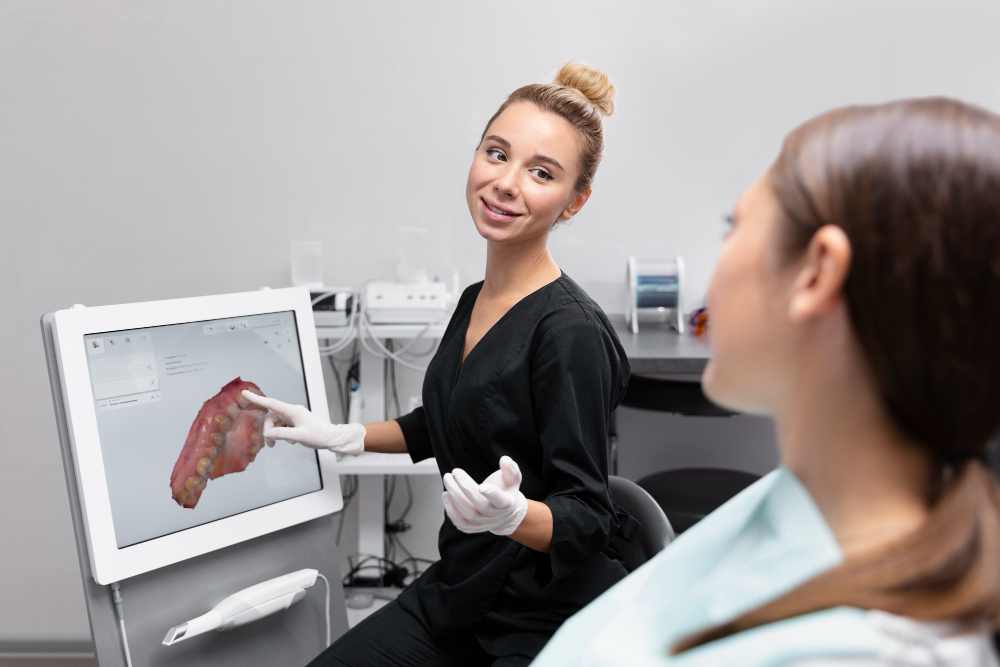
Intraoral scanners are small, handheld devices. Dentists gently move them inside your mouth. The scanner takes thousands of pictures in seconds. Then, special software combines these images to make a 3D model of your teeth. Because this process is quick, you spend less time in the dental chair. Also, there is no need for sticky impression materials.
Benefits of Intraoral Scanners for Patients
There are many benefits of intraoral scanners for patients. For example, you may notice:
Additionally, digital scans can be shared easily with dental labs. This means your crowns, aligners, or dentures may fit better and arrive sooner.
The Process of Getting a Digital Dental Scan
First, your dentist will explain the digital dental scan process. Next, you will sit comfortably in the dental chair. The dentist will gently move the scanner around your teeth. You may see the 3D images appear on a screen in real time. The scan usually takes only a few minutes. Afterward, your dentist reviews the images and discusses the next steps with you.
Accuracy, Safety, and Comfort Considerations
Digital dentistry intraoral scanners are very accurate. According to dental journals, they often provide better results than traditional molds. In addition, the scanning process is safe and does not use harmful radiation. Most patients find the scan comfortable, even if they have a strong gag reflex. Because the scanner is small, it fits easily in your mouth.
Common Myths and Facts
Therefore, you can feel confident about choosing digital dental scans.
Tips for Choosing a Dental Clinic with Digital Scanning Technology
When looking for a clinic, consider these tips:
Because technology changes quickly, it helps to choose a clinic that stays current.
Prevention and Oral Care Tips Related to Digital Dentistry
Even with digital dentistry, good oral care is important. For best results, follow these tips:
With these habits, you can help prevent dental problems and make the most of new technology.
Conclusion
In summary, digital dentistry intraoral scanners offer many benefits for patients. They are fast, comfortable, and accurate. If you want a better dental experience, consider clinics that use digital scanning. Consult your dentist at Dr. Srivatsav Casukhela to learn if digital dentistry and intraoral scanners are right for you.